

























The final men’s major of the season has officially arrived. From July 16–19, 2026, the eyes of the sporting world will focus on the windswept coastline of Southport, England, where the 154th Open Championship will challenge the elite of professional golf at the historic Royal Birkdale Golf Club.
For golf purists and casual fans alike, the Open represents the ultimate test of skill, determination, and strategy. Defending champion Scottie Scheffler and Masters champion Rory McIlroy enter the tournament as heavy favorites, while local hero Tommy Fleetwood will carry the hopes of a hometown crowd just miles from where he grew up. Yet, as these modern titans contend with Birkdale’s iconic dunes and newly redesigned layout, they are not merely battling the elements; they are competing within a living legacy of course design established by the tournament’s founding father.
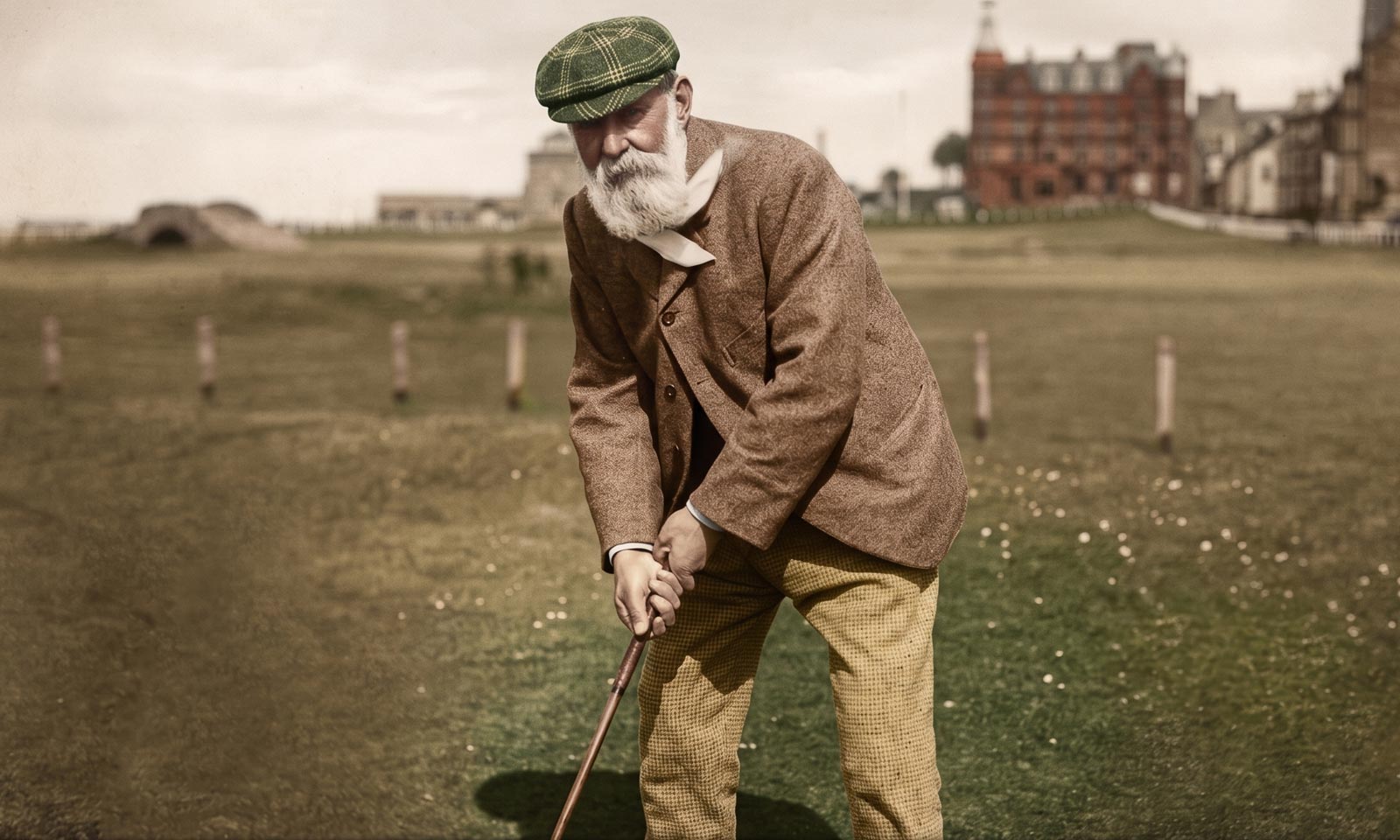
Thomas Mitchell Morris, affectionately known as Old Tom Morris, was born 205 years ago in St. Andrews. He not only won the Open Championship four times (in 1861, 1862, 1864, and 1867) but also played a pivotal role in its founding. Every time a player faces the fierce crosswinds at the 154th Open Championship, strategizes a bump-and-run, or navigates a pristine green, they participate in the global legacy that Morris built from the ground up.
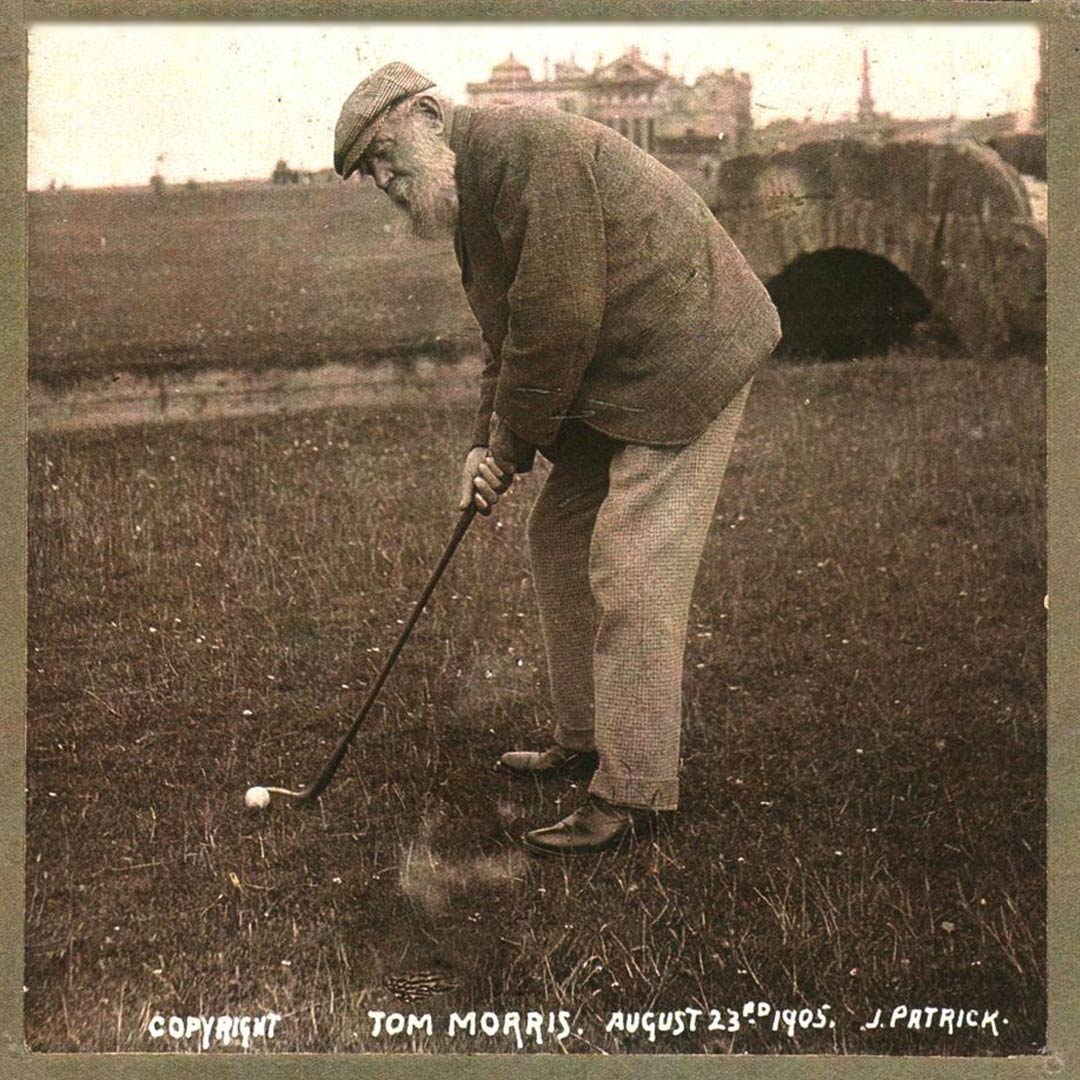
The Grand Old Man: Old Tom Morris on the links, 1905. Credit: Print Collector / Getty Images
The Grand Old Man: Old Tom Morris on the links, 1905. Credit: Print Collector / Getty Images
From “Sillybodkins” to a Golfing Revolution
Long before the multi-million dollar purses of today, Morris’s relationship with golf began on a humble note. Born on June 16, 1821, to a weaver in St. Andrews, he grew up playing “sillybodkins,” a street game in which local boys used homemade clubs to hit corks pierced with nails.
His raw talent earned him an apprenticeship under Allan Robertson, who is recognized as the world’s first true professional golfer. Together, they managed the St. Andrews Links and created high-quality equipment. However, Morris’s innovative spirit would not conform to the status quo. In 1848, Robertson dismissed him for a “blasphemous” act: choosing to play with the newly invented gutta-percha (“gutty”) ball instead of the expensive feather-stuffed leather balls Robertson sold.
Morris recognized that the gutty ball would democratize the game, making it accessible to a broader audience. This instinct for innovation soon defined his course architecture.

The majestic, dune-lined links of Royal Birkdale.
The Master-to-Apprentice Design Legacy
Exiled to the west coast of Scotland in 1851, Morris became the Keeper of the Green at Prestwick, where he laid down the foundational elements of the sport and designed iconic courses. Prestwick also hosted the very first Open Championship in 1860.
Though Morris holds the record as the oldest Open Champion—winning his final title in 1867 at age 46—his impact as a greenkeeper was even more transformative. Upon returning to St. Andrews in 1864, he revolutionized turf management by widening fairways, introducing the practice of top-dressing greens with sand, and intentionally designing hazards to challenge a player’s strategic thinking.
This philosophy traveled south to Royal Birkdale. When the legendary club’s permanent 18-hole links was established in 1897, the task fell to George Lowe, a St. Andrews native heavily influenced by the Morris era. Lowe famously chose to situate Birkdale’s holes among the towering sand dunes rather than flattening the terrain. This decision reflected Old Tom’s guiding principle: a golf course should harmonize with, rather than dominate, the natural landscape.

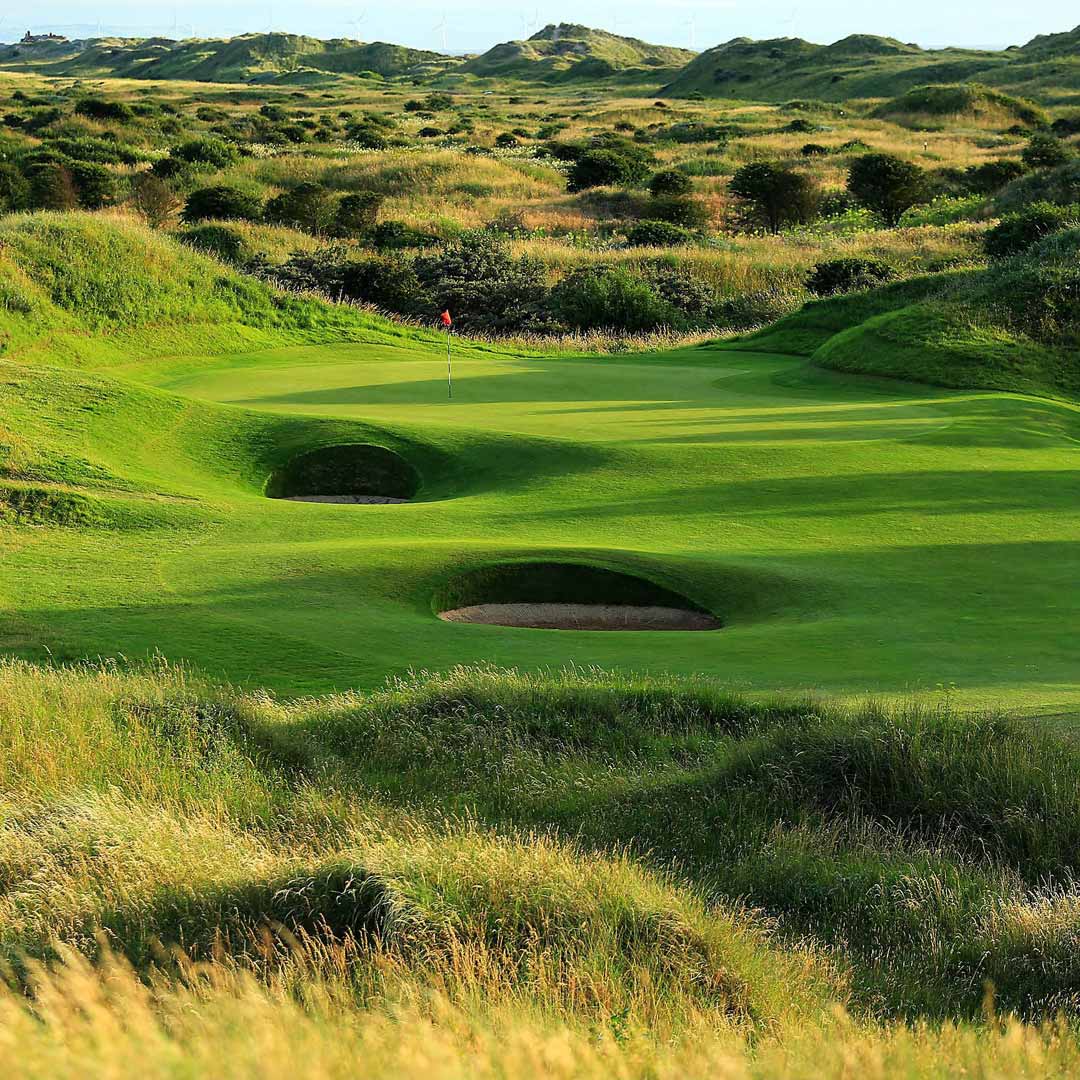
Royal Birkdale Golf Club has hosted The Open Championship a total of ten times.
A Living Legacy in 2026
As today’s field faces Birkdale’s demanding par-70 layout at the 154th Open Championship, they will contend with a course that has been meticulously updated for the modern game, including a completely redesigned back nine featuring a brand-new par-3 15th hole. Despite these changes, the core principles remain true to Old Tom Morris.
Birkdale demands the same imaginative shot-making that Morris championed when he abandoned the feathery ball 178 years ago. It requires patience to navigate the fierce seaside winds and strategic precision to avoid the punishing pot bunkers.
As we prepare for four days of high-drama links competition, the Claret Jug remains the ultimate prize. However, the true essence of the 154th Open Championship lies in the enduring spirit of the weaver’s son from St. Andrews, whose philosophical descendants built the very stages where modern legends are born.